


Part 4 of a five-part series on technology workforce development in the age of AI
In February 2026, Kennesaw State University announced it would launch Georgia’s first Bachelor of Science in Artificial Intelligence in Fall 2026. Two months later, MIT and Georgia State University announced PATH — Pathways for AI Training and Hiring — a multi-year initiative to transform two- and four-year colleges into AI-skilling engines. Georgia Tech’s Online Master of Science in Computer Science enrollments crossed 16,000 students as of Spring 2025. Western Governors University’s School of Technology has revamped its computer science bachelor’s around AI-centered curriculum and reports 15 percent enrollment growth in its technology programs. Google Career Certificates has graduated more than a million learners. Atlanta bootcamps — General Assembly, Georgia Tech Boot Camps, Nucamp, Flatiron — are placing graduates with Delta, Home Depot, and Coca-Cola.
The question facing Atlanta employers is no longer whether AI training is available in the region. It is which model of AI-ready training will actually produce the workforce they need.
This is the fourth installment in an Atlanta Tech News series examining how artificial intelligence is reshaping the Southeast’s technology workforce. Previous pieces have laid out the structural shift in hiring, examined the disappearance of entry-level roles, and detailed the rise of the “readiness portfolio” — a stacked combination of credentials, demonstrated skills, and AI fluency that employers now want. This piece focuses on who is producing those readiness portfolios, and how the arms race among regional institutions is likely to shake out.
The traditional universities
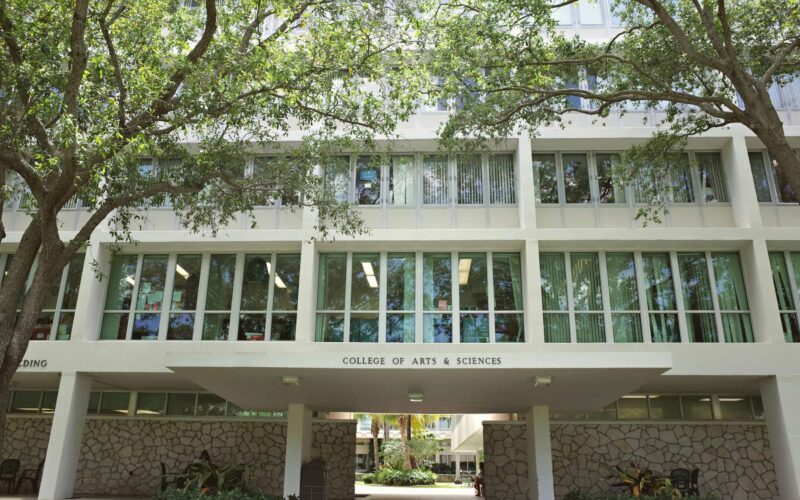
Kennesaw State’s new Bachelor of Science in Artificial Intelligence will launch at the university’s Marietta Campus and online, making KSU the first institution in Georgia to offer both an undergraduate and a graduate degree in AI. KSU already offers a Master of Science in Artificial Intelligence, launched in 2024, and a “Double Owl” accelerated pathway that allows students to earn both the BS and the MS on a compressed timeline. The announcement cited a Georgia Chamber of Commerce projection of 186,000 new STEM jobs in the state over the next five years.
The degree will include a first-year experience course, a writing-intensive computing course, and an applied AI capstone that pairs students with industry partners. It is designed, in other words, for employers as much as for students — with explicit pathways into internships and project-based work during the degree.
Georgia State University’s PATH initiative takes a different approach. Announced jointly with MIT RAISE in April 2026, PATH emphasizes in-person, collaborative learning where students work in teams on real problems brought by industry partners. More than 1,000 GSU students are already enrolled in PATH courses, with curriculum co-designed with MIT spanning AI foundations, data science, deep learning, and agentic AI systems. The PATH curriculum is being shared with partner institutions including Georgia Gwinnett College, Georgia State Perimeter College, and Clark Atlanta University.
“PATH emphasizes in-person, collaborative learning where students work in teams to address real problems brought by industry partners,” MIT and Georgia State said in their joint April announcement, “mirroring the kinds of challenges graduates will face in the workplace, helping them build technical skills alongside judgment, communication, collaboration, and ethical awareness that employers increasingly value.”
GSU’s PATH sits alongside the university’s existing graduate offerings, including a Graduate Certificate in Generative AI and Machine Learning for Business designed for working professionals.
Georgia Tech remains the Southeast’s high-end technical benchmark. Its Online Master of Science in Computer Science program, known as OMSCS, enrolled 16,609 students as of Spring 2025, with total program cost around $7,000 — a price point that significantly undercuts most comparable programs. Georgia Tech’s Professional Education division also offers targeted AI training in specific domains like manufacturing.
The national online model
Western Governors University represents a different bet entirely. WGU’s competency-based education model lets students move through material as they demonstrate mastery, meaning faster learners can complete degrees more quickly while students who need more time are not penalized. The model has produced significant enrollment gains in Georgia, where WGU now has more than 8,400 students — 62 percent of whom work full-time or part-time while pursuing their degrees.
The university has recently revamped its computer science bachelor’s around AI-centered curriculum, launched an AI Skills Fundamentals Certificate explicitly named in its own Workforce Decoded research as a credential employers look for, and reported 15 percent enrollment growth in its technology programs. A transfer partnership with the Technical College System of Georgia, signed in 2022, has moved more than 2,900 Georgia technical college graduates into WGU degree programs.
WGU’s Regional Vice President for the Southeast, Kim Estep, will host an executive panel in Atlanta on April 29 titled “Leading through the Shift: Workforce Strategy in an AI Accelerated Economy.” The event is one data point in a larger regional pattern of institutional outreach to employers — a pattern that Kennesaw State, Georgia State, and the alternative credential providers are all pursuing in their own ways.
The alternative credential providers
Outside the traditional university system, the credential economy has grown into a serious competitor for the same workforce. Google Career Certificates has graduated more than one million learners and launched a new AI Professional Certificate in February 2026, with more than 150 employer partners. Coursera offers more than 250 university partnerships. edX and 2U report more than 99 million learners across their platforms.
Udacity, acquired by Accenture in May 2024, offers an Azure Generative AI Nanodegree at roughly $1,200 to $1,800 per month. LinkedIn Learning has co-developed pathway programs in “AI for Organizational Leaders” and “AI for Managers” with Microsoft. These are not accredited degree programs, but they are explicitly named in employer surveys — including WGU’s own Workforce Decoded report — as credentials hiring managers look for.
The bootcamp middle tier
Between the four-year degree and the self-paced online certificate sits the Atlanta bootcamp ecosystem. General Assembly’s Atlanta operation has graduated more than 1,000 students, reports a 90 to 99 percent placement rate, and charges roughly $16,450 in tuition. Its employer partnerships include Delta and Home Depot. Georgia Tech Boot Camps charge around $10,000, include an AI-Enhanced Development module, and feed into a Coca-Cola hiring pipeline. Nucamp, at roughly $3,582 for its 15-week AI Essentials for Work program, reports a 78 percent employment rate. Flatiron School operates out of WeWork Colony Square offering full-stack, data science, and AI programs. Emory University’s coding bootcamp has integrated generative AI into its web development curriculum.
Employer signals
For Atlanta employers trying to choose where to recruit, the signals are mixed. The WGU Workforce Decoded data suggests employers value stacked credentials — degree plus certificate plus demonstrated skills — more than any single pathway. Only 37 percent of employers nationally believe higher education is adequately preparing graduates for the workforce, which leaves substantial room for alternative and hybrid models to compete.
The practical implication, for Atlanta workers making decisions about where to invest in their own training, is that no single institution holds a monopoly on AI workforce preparation in the region. Kennesaw State’s new bachelor’s program, Georgia State’s PATH initiative, Georgia Tech’s OMSCS, WGU’s competency-based model, Google Career Certificates, and Atlanta’s bootcamp ecosystem each address different parts of the readiness portfolio employers want.
What comes next
The final installment in this series translates the findings from the first four pieces into concrete next steps for four stakeholder groups: employers reshaping their hiring, educators designing curriculum, workers building their own readiness portfolios, and policymakers deciding where to direct workforce development investment. The twelve-month window before today’s hiring patterns harden into permanent structure is closing. The decisions made between now and mid-2027 will determine whether the Southeast leads or lags the AI workforce transition.
Atlanta Tech News will continue ongoing coverage of Technology Workforce Development across the Southeast. Visit atlantatech.news for the full series and additional reporting.