




Two years ago, Ben Coulter was being wheeled down a hospital corridor in Asheville, looking up at the ceiling tiles through the soft fog of pre-surgery sedation. Back surgery. Two nurses had the gurney.
“I looked up at one and I said, where did you go to college?” Coulter recalled. “And they said, Western Governors University.”

Coulter, who is the Southeast regional director for WGU and chancellor of WGU North Carolina, almost fell off the gurney. By the time the masks came down in the operating room, a third nurse on the surgical team had volunteered the same alma mater. He could hear them talking about it overhead as he went under.
It is the kind of story that, in another setting, would land as a tidy alumni-magazine anecdote. Coulter tells it for a different reason. The Southeast’s healthcare workforce, its teaching workforce, and increasingly its technology workforce are being staffed in real time by graduates of an institution that almost no one in the region thinks of as a major university – because it doesn’t have a campus, doesn’t do football, and runs on a model most of higher education still hasn’t copied.
The footprint, in numbers
WGU’s Southeast region spans seven states — Tennessee, North Carolina, South Carolina, Georgia, Florida, Mississippi and Alabama — and Coulter wears two hats inside it. As regional director he oversees the whole footprint. As chancellor of WGU North Carolina, the state affiliate, he is responsible for roughly 6,000 active students and more than 12,000 alumni in his home state.
Georgia is the bigger number: more than 8,300 active students and over 13,000 graduates, by Coulter’s count. Nationally, WGU has crossed roughly 200,000 students and is closing in on a half-million graduates. The university is also opening a second headquarters in Raleigh — a decision Coulter attributes to the same Southeast economic-development surge that drew much of this year’s panel conversation.
Roughly 25% of WGU’s students nationally are military-affiliated; in the Southeast, with its concentration of bases and veterans, the percentage runs higher. A growing share is active duty.
The model, in one paragraph
WGU is online, asynchronous, fully accredited, competency-based, and structured around six-month terms in which a motivated student can take as many courses as they can shoulder. The university was founded in 1997 by the Western Governors Association with a deceptively simple thesis: instead of measuring how long a student sits in a seat, measure whether they have demonstrated mastery of the skill. The average WGU student is 33 or 34 years old. Many already have some college credit but no degree. Almost all of them, Coulter said, have had life get in the way of finishing somewhere else.
The institutional answer to that profile is what WGU calls a program mentor — a subject-matter expert assigned to every student, but functioning, in Coulter’s description, as something closer to a life coach. Mentors meet with their students at least biweekly. They almost never meet in person. They are, Coulter said, what graduates most often credit for finishing the degree at all.
The quiet engine: WGU Labs
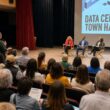
If the panel’s diagnosis was that AI is reshuffling skills faster than higher education can react, the most concrete response in the Atlanta Tech News interview came from Ramah Malebranche, a senior regional manager at WGU, when he raised an arm of the institution most people outside it have never heard of.
“WGU has a fairly quiet WGU Labs component,” Malebranche said. “Labs is the investment and research arm of the university. They invest in technology, they assess technology, they write white papers. They have their own PhD roster of researchers.”
Labs, in Malebranche’s telling, is doing two jobs at once. It is testing emerging educational technology inside WGU’s own programs, and it is investing in outside technologies and watching how they perform in the broader market — with the resulting data flowing back into curriculum design.
He pointed to a working example. Two of WGU’s coding certifications — in front-end development and Java — began as a Labs pilot built in partnership with Code Signal, the assessment platform employers use to evaluate coders during hiring. WGU students complete their coursework on the same platform that will, later, evaluate them in a job interview. Their performance is captured and validated. AI is deployed inside the pathway as a learning companion.
“So they can walk into the conversation with those scores and that evidence,” Malebranche said.
It is a small, specific answer to a problem that came up repeatedly during the morning’s panel: that employers don’t trust generic credentials anymore, and that students need a way to demonstrate not just what they know, but what they can actually do in a system the employer already recognizes.
The feedback loop
Malebranche made one other point worth pulling out. WGU, he said, is unusually good at capturing data — from current students and, more importantly, from the alumni already at work in Southeastern hospitals, classrooms, IT departments and command centers. That feedback shapes what the university teaches next.
It is the un-glamorous version of what Dr. Paul LaForge, WGU’s dean of technology, told the panel about data being “the railroad tracks” AI runs on. The institution is collecting tracks on itself.
What’s next in the Southeast
Cybersecurity, Coulter said, is currently the strongest demand signal in the region — driven in part by the military population, in part by employer hunger, and in part by the discipline’s natural fit with WGU’s asynchronous, mission-oriented model. The university offers bachelor’s and master’s degrees in cyber and information assurance.
On May 4, WGU opens admissions to the new Bachelor of Science in AI Engineering announced by LaForge during the panel. Coulter framed it the same way LaForge had: a degree designed for people who want to build the models, not just use them — and a deliberate attempt to make sure those people can come from anywhere in the Southeast, regardless of the broadband, the data centers, or the employer density of their hometown.
Which, in the end, is the bet underneath the bet. The diagnosis from the panel was that AI is rearranging which skills carry value and which entry-level rungs disappear. WGU’s Southeast operation — with its mentors, its Labs pilots, its alumni feedback loop, and its growing footprint in Atlanta and Raleigh — is one institution’s wager that an online, competency-based university can move fast enough to keep up. Whether it can will be measured the same way it was measured in an Asheville operating room: by how many people, in how many corners of the region, end up doing the work.




1 comment