


If you’re an employer in Metro Atlanta trying to fill a technology, healthcare, or business role, the playbook you used two years ago is already outdated. If you’re a working professional wondering whether AI is coming for your job, the answer is more nuanced than the headlines suggest — but the clock is ticking.
That’s the picture emerging from Western Governors University’s Workforce Decoded: AI, Skills and the Future of Hiring report. First released in December 2025 with an updated national installment and state-level reports following in early 2026, the study — based on a survey of 3,147 U.S. employers conducted by Centiment — paints a detailed portrait of a hiring landscape in active transformation, driven not by some distant AI future but by decisions being made right now in boardrooms, HR departments, and hiring committees across the country.
And for Georgia, where WGU currently has more than 8,400 enrolled students — 62% of whom are working full-time or part-time while pursuing their degrees — the findings carry particular weight.
The Numbers Tell a Clear Story
The headline finding is stark: 76% of employers say AI has already shifted the types of candidates they’re looking for. This isn’t a projection about 2030. It’s happening now.
The ripple effects are reshaping the entire talent pipeline. More than 40% of employers say mid-level talent — professionals with five to ten years of experience — is now the most in-demand hiring tier. Meanwhile, 38% are actively reducing entry-level hiring because of AI, particularly in information technology and financial services. And the message to job seekers is unambiguous: 78% of employers now say work experience is equal to or more valuable than a degree.
For the greater Atlanta metro area — home to one of the fastest-growing technology ecosystems in the Southeast and a regional hub for healthcare, fintech, and logistics — these trends are not abstract. They’re the reality facing the 13,000 technology companies and 135,000 technology workers in the region.
The Skills Shift: Degrees Still Matter, But They’re Not Enough
One of the report’s most telling findings is how employers are recalibrating what they look for in candidates. Nearly half (46%) plan to increase their focus on skills over degrees, while 43% are placing more emphasis on work experience, internships, and apprenticeships.
But this isn’t the “degrees are dead” narrative that dominates social media. The data is more measured: 68% of employers still say degrees are important, and 86% view certificates as valuable indicators of readiness. The challenge, it turns out, isn’t whether credentials matter — it’s that 53% of employers say their biggest hiring challenge is validating whether candidates actually possess the skills they claim. Employers aren’t abandoning credentials; they’re building what the report describes as a wider “readiness portfolio” where degrees, certificates, and demonstrated competencies collectively strengthen hiring decisions.
The skills employers rank as most critical for job success are notably human: critical thinking and problem solving (60%), time management (41%), adaptability (40%), and emotional intelligence (37%). These are precisely the kinds of competencies that AI cannot easily replicate — and that working professionals develop through years of experience, not classroom instruction alone.
AI Fluency Is No Longer Optional
Perhaps the most actionable section of the report deals with how employers are evaluating AI competency. Half of all employers surveyed are now assessing candidates’ AI fluency — looking specifically at comfort with AI tools, relevant certifications, and the ability to integrate AI into their work. This isn’t confined to engineering roles. It’s becoming a baseline expectation across industries.
How are they doing it? Thirty-nine percent are evaluating real-world experience with tools like ChatGPT, Copilot, and Python libraries. Thirty-two percent are looking for certifications from providers like AWS, Microsoft Azure AI, and WGU. And 52% are assessing AI competency through technical skills-based assessments or on-the-project evaluations. The message is clear: employers want to see that you can actually use AI, not just talk about it.
For Gen Z and early-career professionals, the report delivers pointed advice: focus on building transferable skills that AI cannot easily replicate, prioritize continuous learning in digital fluency and emerging technologies, and gain real-world experience early. Employers increasingly expect entry-level candidates to demonstrate job-relevant skills before they’re hired, not after.
What This Means for Georgia’s Working Adults
This is where the data becomes personal for the Atlanta community. WGU’s Georgia enrollment tells a story that mirrors the national findings almost perfectly. The university’s more than 8,400 Georgia students are overwhelmingly working adults — people who are already in the workforce and pursuing education to advance or pivot their careers. These aren’t traditional students. They’re professionals filling positions in IT, business, healthcare, and K-12 education across the metro area while simultaneously upskilling.
That profile aligns precisely with the candidate employers say they want most: experienced, adaptable professionals who combine practical work history with current credentials. And it matters that they’re getting that education from an institution designed for them — only 37% of employers nationally believe higher education is preparing students with the skills needed for the workforce. WGU’s competency-based model, built around demonstrated mastery rather than seat time, is designed to close exactly that gap. The 62% of WGU’s Georgia students who work while pursuing their degrees are, in effect, building exactly the kind of “readiness portfolio” that employers describe valuing.
WGU’s School of Technology has leaned into this moment. The university recently revamped its computer science bachelor’s program with an AI-centered curriculum, launched an AI Skills Fundamentals Certificate, and has seen 15% enrollment growth in its technology programs. The institution has also deepened its presence in Georgia through a transfer partnership with the Technical College System of Georgia (TCSG) that has already provided a pathway for more than 2,900 Georgia technical college graduates to continue their education.
The Conversation Atlanta Needs to Have
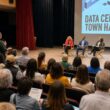
Later this month, WGU is bringing this conversation directly to Atlanta. Kim Estep, WGU’s Regional Vice President for the Southeast, will be in the city for an executive panel hosted by WGU’s School of Technology titled Leading through the Shift: Workforce Strategy in an AI Accelerated Economy. The event is designed to bring together business leaders, workforce development professionals, and educators to discuss how organizations in the region are adapting their talent strategies as AI reshapes the employment landscape.
It’s a timely conversation. The Workforce Decoded data makes clear that the shift isn’t coming — it’s here. And the organizations that move earliest to align their hiring, training, and workforce development strategies with this new reality will have a meaningful competitive advantage.
For Atlanta’s working professionals, the message from the data is clear but not hopeless: the most valued candidates aren’t necessarily the ones with the most impressive pedigrees or the deepest technical AI expertise. They’re the ones who combine real-world experience with a willingness to adapt, upskill, and demonstrate competency in new ways. They’re the ones who are already doing the hard work of evolving while employed.
In other words: the 8,400 Georgians currently enrolled at WGU, balancing coursework and careers, may be better positioned for this moment than they realize.
WGU’s Workforce Decoded: AI, Skills and the Future of Hiring report is available at wgu.edu. The Atlanta executive panel event takes place on April 29, 2026. Registration is available through WGU’s events page. Atlanta Tech News will be covering the event. For more on AI, workforce development, and the Southeast tech ecosystem, visit atlantatech.news.