




Neighborly Software, the provider of the industry’s most comprehensive platform for Housing, Economic, and Community Development program management, announced the successful completion of its Service Organization Control (SOC®) 2 Type 2 compliance audit. This is a significant achievement, requiring a substantial commitment of financial and internal resources. The certification positions Neighborly Software very well with government bodies who require SOC2 compliance as a condition of doing business with them. It is also a powerful 3rd party validation of the company’s ability to not only implement critical security policies, but also prove compliance over an extended period of time.
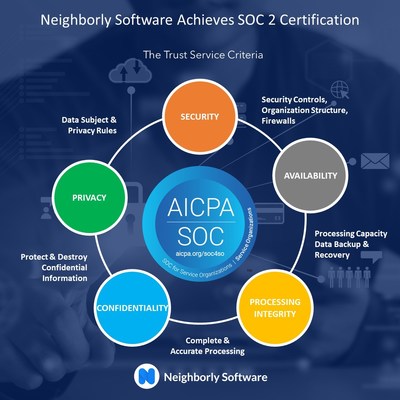
A Service Organization Controls (SOC) report is prepared by an independent auditor and is based on the Trust Service Principles and Criteria framework developed jointly by the American Institute of Certified Public Accountants (AICPA) and the Canadian Institute of Chartered Accountants (CICA).
As part of Neighborly Software’s SOC 2 Type 1 certification, an independent auditor verified that the company follows internal controls related to compliance and operations, including how sensitive data is stored, handled, and transmitted.
Following its certification for SOC 2 Type 1, Neighborly Software continued the process to become Type 2 certified. This additional certification is awarded to companies that meet stringent requirements related to the security, availability, and processing integrity of the systems the company uses to process users’ data. SOC 2 Type 2 certification confirms the design, effectiveness, and implementation of those controls during the certification review period.
“Successfully completing SOC 2 Type 2 demonstrates that our platform can be trusted to adhere to strenuous compliance standards,” said Chris Behm, COO of Neighborly Software. “Our clients can feel confident that we will continue to make investments to establish and maintain the highest level of security and compliance.”
Neighborly Software will maintain its SOC 2 Type 2 certification through yearly 3rd party audits.
Since 2016, Neighborly Software has partnered with its “Neighbors” (clients) to reimagine and reinvent the way housing, economic and community development programs are administered. With 350+ public sector Neighbors using its platform, Neighborly Software has established itself as the premiere software in City, County, and State markets.
The company’s cloud-based software provides a comprehensive, integrated solution that replaces paper-based applications, manual processes, and outdated technology. Organizations can not only improve their efficiency and regulatory compliance, but also provide a better client experience for the populations they serve.
For more information about Neighborly Software, please visit www.neighborlysoftware.com or follow us on LinkedIn, Twitter, and Facebook. You can also follow our Neighborly Navigator Podcast show on Spotify.